gitwho: Why I Built a GitHub Profile Intelligence Tool
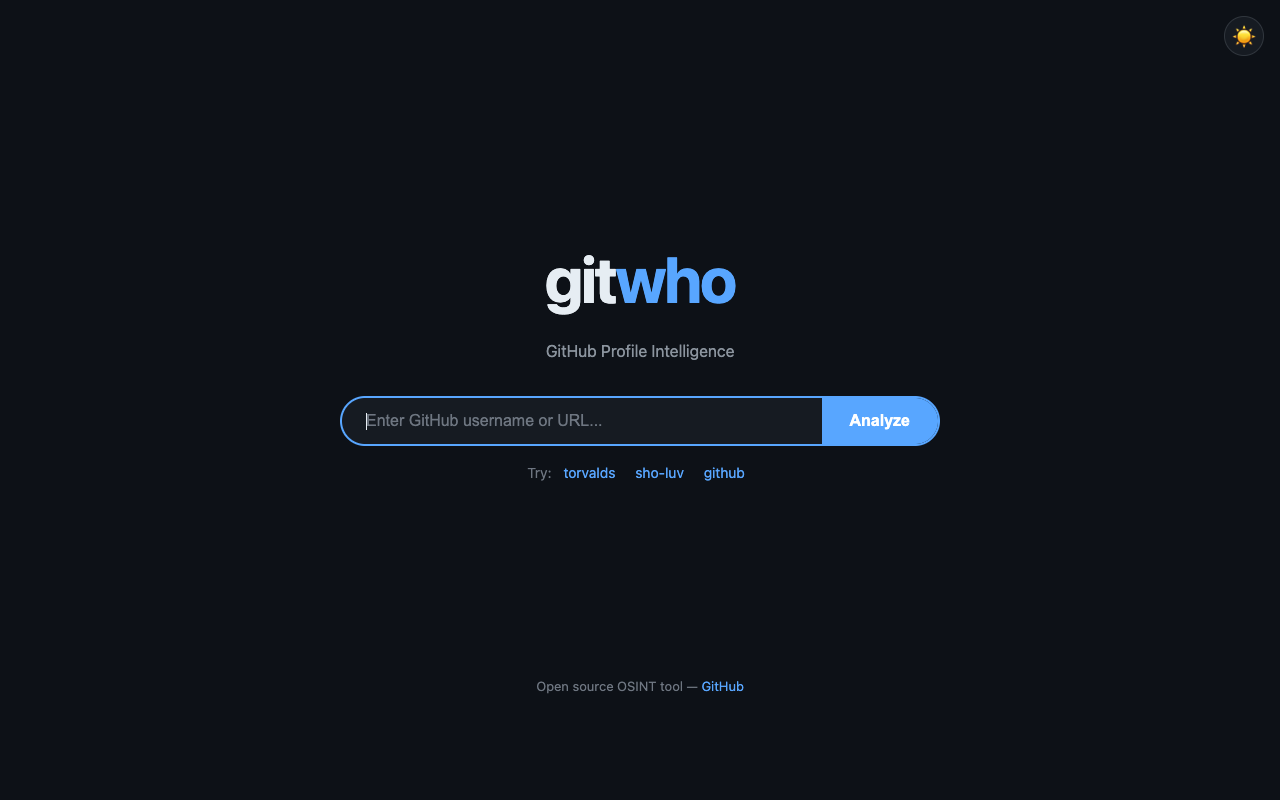
GitHub profiles tell you a lot about a person if you know where to look. But GitHub's UI is designed for browsing code, not for quickly understanding who someone is as a developer. I kept running into the same problem from different angles, so I built gitwho.
The Problem
Whether you're a recruiter trying to evaluate a candidate, a security professional doing reconnaissance, or just curious about what someone builds, the process is the same. You click through their repos, mentally tally their languages, scroll through their stars, check their PRs, look at who they follow. It takes 15-20 minutes to build a decent picture, and you're doing it all in your head.
What gitwho Does
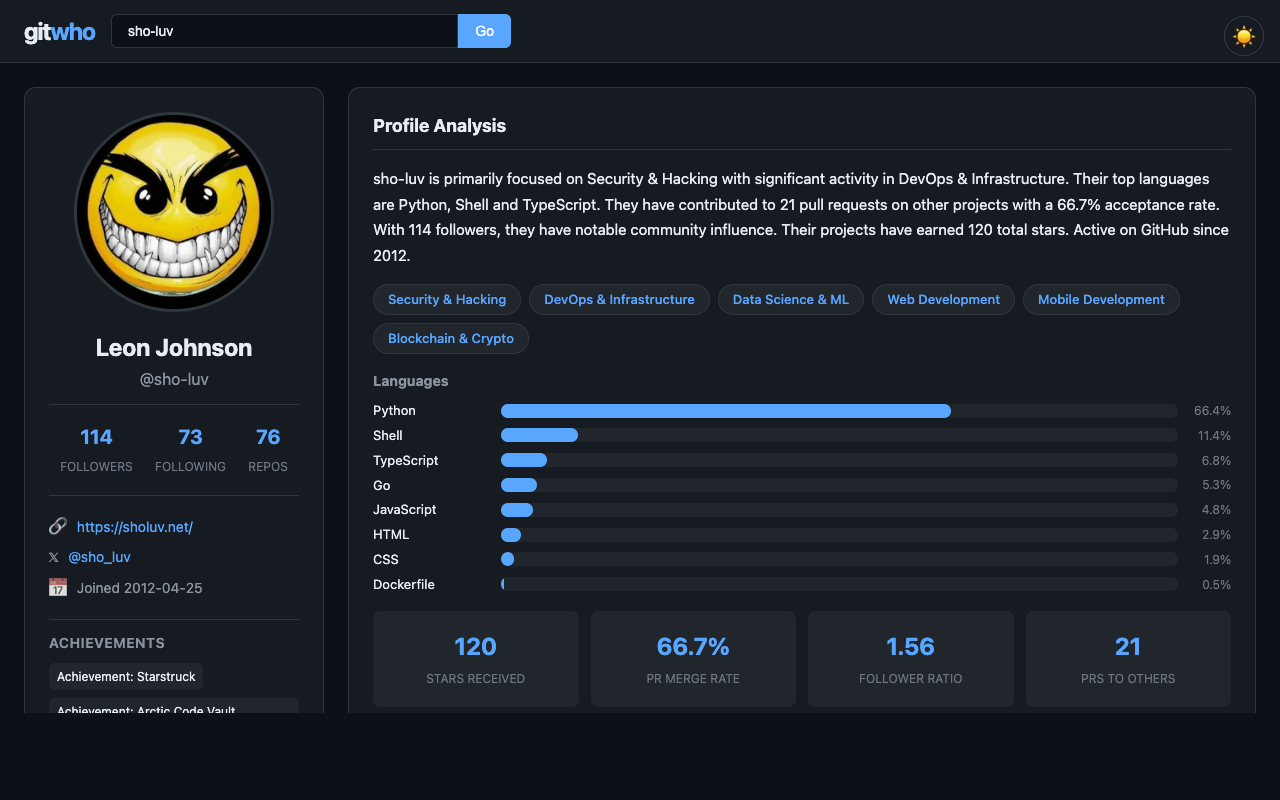
Give it a GitHub username and it pulls everything into a single intelligence report: profile data, repositories sorted by stars, language breakdown (filtering out forks unless the user has significantly contributed to them so the stats aren't skewed), pull requests to other projects (merged, pending, rejected), starred repos, organizations, followers, following, and achievements.
Then it runs a rule-based analysis that categorizes the user's focus areas like security, web dev, DevOps, data/ML, systems, and mobile, and computes community metrics like PR merge rate and follower ratio.
Who This Is For
Recruiters and hiring managers. Instead of scanning repos one by one, you get an instant breakdown of what languages a candidate actually uses, what categories they work in, whether they contribute to open source projects (and whether those PRs get merged), and how active they are in the community. The language percentages are calculated from actual code across all their repos, not just what they list on their resume.
Security professionals. During pentests and red team engagements, GitHub profiles reveal attack surface. What tools does a target org's developer star? What frameworks do they use? Are they running vulnerable versions of things? What organizations are they in? gitwho was originally built for this, turning scattered OSINT into a structured profile.
Open source maintainers. When someone submits a PR to your project, you want to know who they are. Are they a drive-by contributor or someone with deep experience in the relevant stack? Do they have a track record of merged PRs to other projects?
Developers exploring the community. Find out what your favorite open source contributors are working on, what tools they use, and who they follow. It's a window into how experienced developers organize their work.
How It Works
The CLI version runs locally with Python and gives you rich terminal output. The web version is a static frontend backed by a Cloudflare Worker API, so anyone can use it without installing anything.
The analysis is entirely rule-based with no paid APIs and no OpenAI calls. It uses a keyword taxonomy to score repos and starred repos across categories, aggregates language percentages from actual byte counts, and generates a natural language summary. If you have Ollama running locally, it can optionally enhance the summary with a local LLM.
All data comes from GitHub's public API. gitwho doesn't access anything you couldn't find manually, it just does it in 10 seconds instead of 20 minutes.
Try it at sholuv.net/gitwho or grab the source from GitHub.
